3.5 MW Dessau Germany: Completed Solar Construction Project
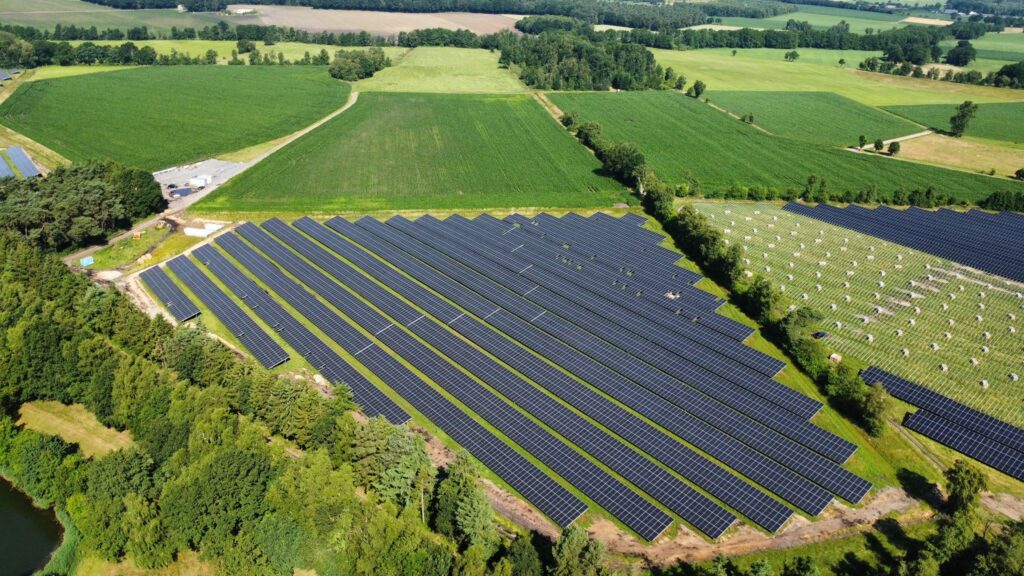
The 3.5 MW Dessau Germany project represents a precision-executed utility-scale solar installation in one of eastern Germany’s established industrial regions. Located in Saxony-Anhalt, this ground-mounted photovoltaic facility demonstrates how mid-scale solar construction projects contribute to regional energy infrastructure while maintaining the engineering standards expected from German renewable energy development. KXS Energy delivered comprehensive utility-scale solar construction services, managing every phase from initial site assessment through final grid connection.
| Field | Details |
|---|---|
| Project Name | 3.5 MW Dessau Germany |
| Location | Dessau-Roßlau, Saxony-Anhalt, Germany |
| Project Type | Ground-mounted photovoltaic installation |
| Capacity | 3.5 MW |
| Foundation Type | Driven steel pile foundations |
| Grid Connection | Medium-voltage connection to regional distribution network |
| Execution Model | Full-service construction partnership |
Project Overview: 3.5 MW Solar Development in Dessau
Dessau-Roßlau, located at the confluence of the Mulde and Elbe rivers in Saxony-Anhalt, provided a strategic location for this solar installation. The region’s industrial heritage, combined with available land suitable for renewable energy development, made it an appropriate site for expanding Germany’s distributed solar generation capacity.
The 3.5 MW Dessau Germany installation occupies a designated development zone with favourable solar irradiance characteristics for central Germany. Annual solar radiation in this region typically ranges between 1,000 and 1,100 kWh per square metre, supporting reliable energy generation throughout the operational lifetime of the facility. This project adds to the growing portfolio of renewable energy assets contributing to Saxony-Anhalt’s energy transition objectives.
Technical Implementation at the 3.5 MW Dessau Site
Site preparation for the Dessau project involved comprehensive geotechnical assessment to determine optimal foundation specifications. Soil analysis confirmed suitability for driven steel pile foundations, which were selected for their installation efficiency and structural reliability across the project area.
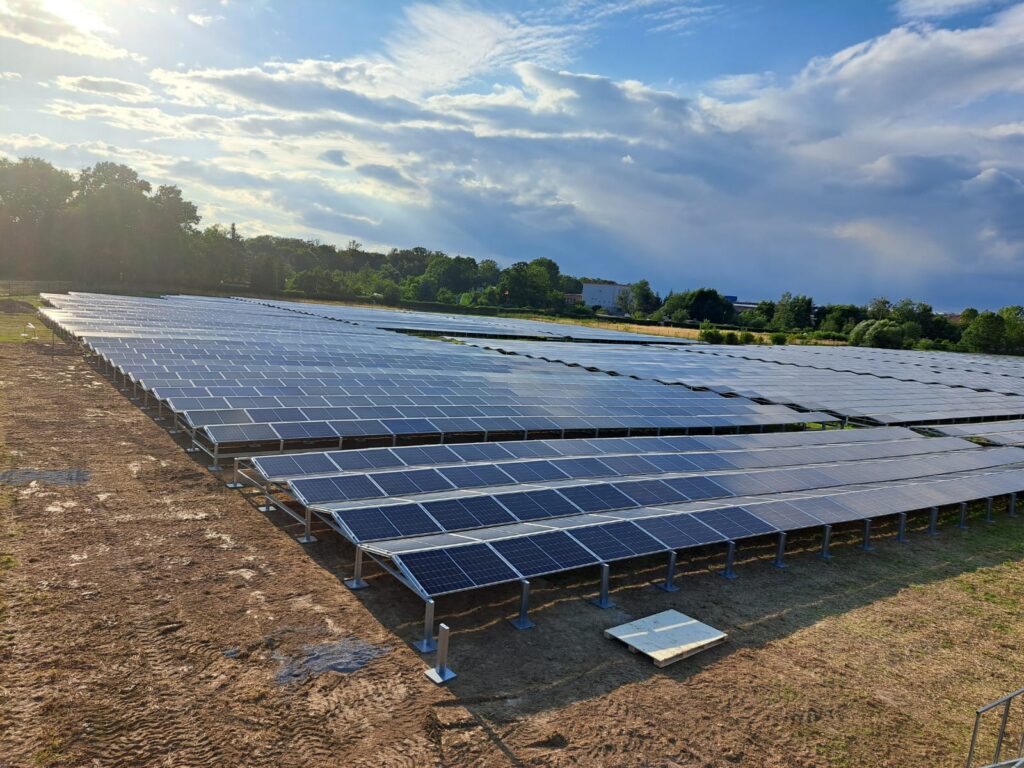
The mounting system was engineered to accommodate local terrain variations while maximising energy yield. Module orientation and tilt angles were calculated based on site-specific solar resource data, balancing annual energy production against structural wind and snow load requirements applicable to this region of Germany.
Electrical infrastructure design incorporated string inverter configuration appropriate for a 3.5 MW installation. Cable routing, combiner boxes, and medium-voltage transformer specifications were determined through detailed engineering analysis. The grid connection solution was developed in coordination with the local distribution system operator to meet all technical requirements for medium-voltage interconnection.
Project Execution: Construction Phases in Dessau
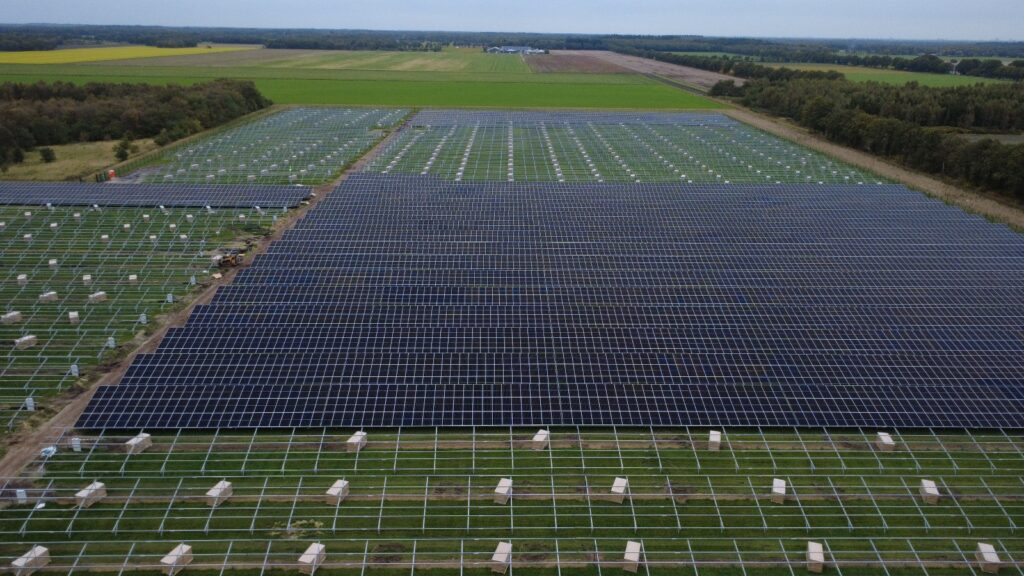
KXS Energy solar construction services managed the Dessau project through a structured execution approach. Foundation installation proceeded systematically across the site, with pile-driving operations completed according to engineered specifications for each array section.
Module mounting followed foundation completion, with installation crews working in coordinated sequences to maintain construction efficiency. Quality control procedures verified mechanical connections and module positioning throughout the installation phase.
Electrical installation and commissioning represented the final construction phases. String connections, inverter integration, and transformer commissioning were completed prior to grid connection testing. The project achieved operational status following successful completion of all required inspections and grid compliance verification.
Project Impact: Renewable Infrastructure Contribution
The 3.5 MW Dessau Germany facility contributes to regional renewable energy capacity in Saxony-Anhalt. At this capacity, the installation is expected to generate electricity sufficient to offset several thousand tonnes of carbon dioxide emissions annually when compared to conventional generation sources.
This project supports Germany’s broader renewable energy targets under the Energiewende framework. Mid-scale installations like the Dessau project complement larger utility-scale developments by adding distributed generation capacity across multiple grid connection points, contributing to overall system resilience.
Industry Insights from 3.5 MW Dessau Germany
The Dessau project illustrates several considerations relevant to energy developers and investors evaluating similar mid-scale solar opportunities in Germany. Site selection in established industrial regions can benefit from existing grid infrastructure and streamlined permitting processes.
Projects in the 3-5 MW range represent a balance between development complexity and generation capacity. These installations can often utilise medium-voltage connections without requiring extensive transmission infrastructure upgrades, potentially reducing development timelines and interconnection costs.
The execution approach demonstrated at Dessau – comprehensive technical assessment followed by systematic construction phasing – reflects the engineering discipline required for reliable solar infrastructure development in the German market.
Frequently Asked Questions
What is the generation capacity of the Dessau solar installation?
What foundation type was used for the 3.5 MW Dessau project?
How does the Dessau Germany project connect to the electrical grid?
What construction services did KXS Energy provide for the 3.5 MW capacity installation?
The 3.5 MW Dessau Germany project demonstrates the systematic approach required for successful solar construction in the German market. For energy developers, investors, and utilities evaluating ground-mounted photovoltaic opportunities, this installation represents the technical standards and execution discipline characteristic of solar construction made in Germany. As renewable energy capacity continues to expand across Europe, projects like Dessau provide reference points for what structured development partnerships can achieve.