Who builds large-scale solar parks in Europe? 5 Essential Answers
Who builds large-scale solar parks in Europe? Specialized solar construction companies, engineering firms, and full-service contractors execute these complex infrastructure projects, transforming approved development sites into operational power plants. The European utility-scale solar market requires builders with specific capabilities: heavy civil engineering expertise, electrical systems integration, grid connection experience, and regulatory compliance knowledge spanning multiple jurisdictions. These construction partners work alongside developers who secure land rights, permits, and financing, then deliver the physical infrastructure that generates clean electricity for decades. Understanding which companies operate in this space, and what differentiates their capabilities, helps project owners select partners aligned with their technical requirements and commercial objectives.
Types of Companies Building Solar Parks in Europe
The European solar construction landscape includes several distinct company types, each offering different service models and expertise levels. General construction firms sometimes enter the renewable energy sector but often lack specialized photovoltaic experience. Dedicated solar construction companies focus exclusively on photovoltaic installations, developing deep expertise in module mounting, DC systems, and inverter integration.
Full-service solar construction partners manage projects from initial site assessment through final grid connection, coordinating all disciplines under unified project management. These integrated contractors handle civil works, structural installation, electrical systems, and commissioning as a single accountable entity. Companies with European headquarters often provide advantages in understanding local regulations, maintaining nearby equipment inventories, and deploying experienced personnel quickly across borders.
Regional specialists concentrate on specific markets, while pan-European operators maintain capabilities across multiple countries. The choice between these models depends on project scale, location, and the developer’s internal capacity for managing multiple contractors versus a single construction partner.
Who Builds Large-Scale Solar Parks: Key Qualification Criteria
Identifying qualified construction partners requires evaluating several critical factors beyond basic licensing. Track record matters significantly – companies should demonstrate completed projects at similar scale, ideally exceeding 50 megawatts in single installations. Experience with ground-mounted fixed-tilt systems differs substantially from tracker installations, and builders should match the specific technology planned.
Financial stability determines whether a contractor can sustain multi-year project timelines and honor warranty obligations. Bonding capacity, insurance coverage, and balance sheet strength all indicate reliability. Technical certifications, including ISO standards for quality management and environmental practices, demonstrate systematic operational approaches.
Equipment partnerships also matter. Established relationships with tier-one module manufacturers, inverter suppliers, and mounting system providers indicate market position and procurement leverage. Construction companies building solar parks across Europe typically maintain framework agreements that secure competitive pricing and priority allocation during supply constraints.
Construction Phases Managed by Solar Park Builders
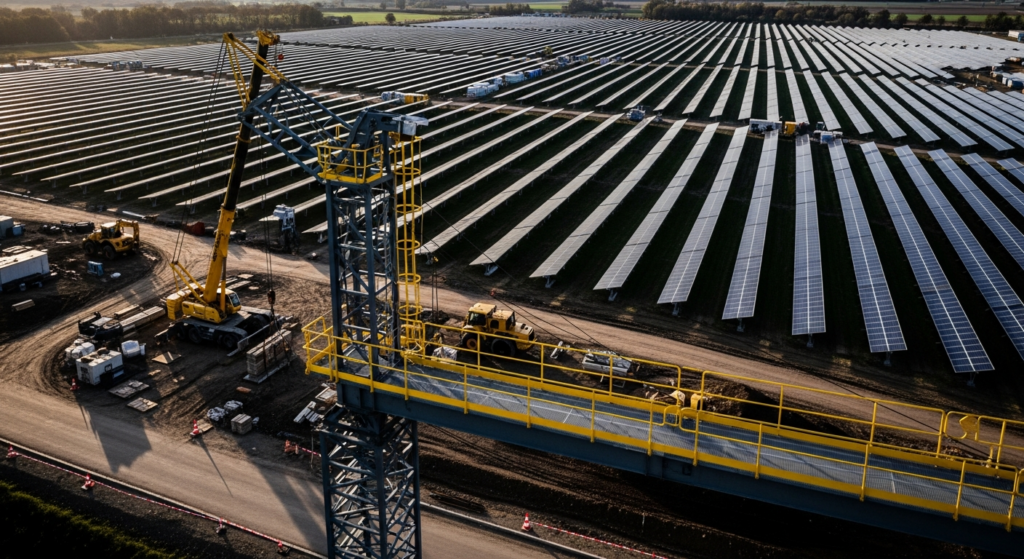
Large-scale solar construction involves distinct phases requiring specialized expertise at each stage. Site preparation begins with geotechnical surveys, topographical mapping, and civil engineering design. Foundation work varies dramatically based on soil conditions – driven piles suit some locations while concrete ballast systems serve others.
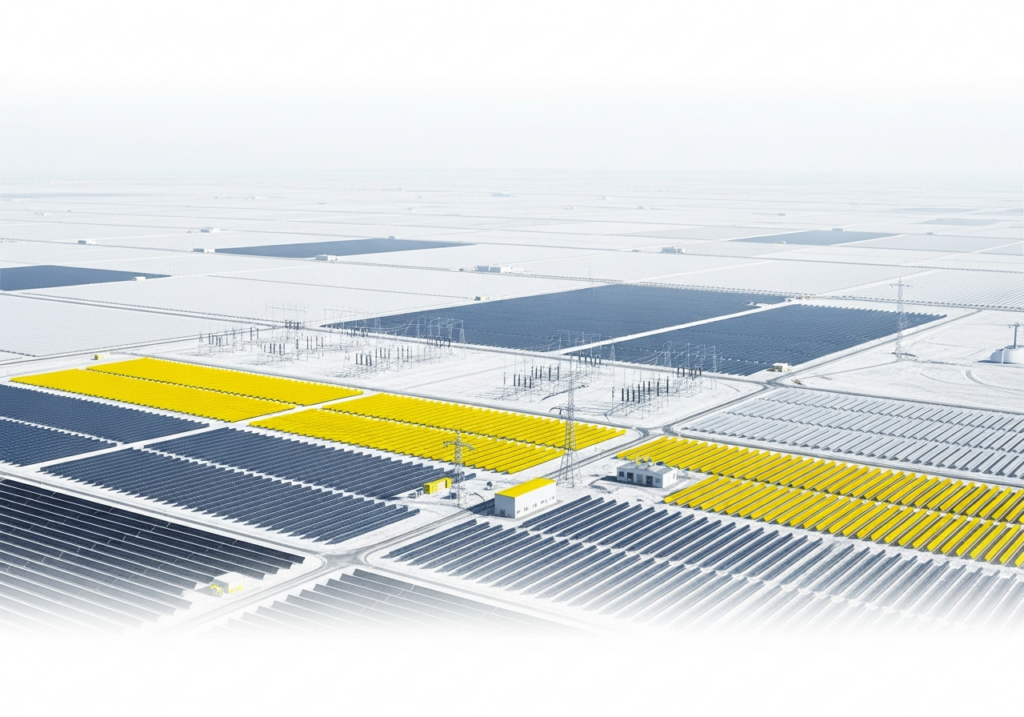
Structural installation follows, with mounting systems supporting module arrays across often hundreds of hectares. This phase demands precision engineering and efficient logistics, as utility-scale projects may involve installing 500,000 or more individual modules. DC electrical systems connect module strings to central inverters or string inverters distributed across the site.
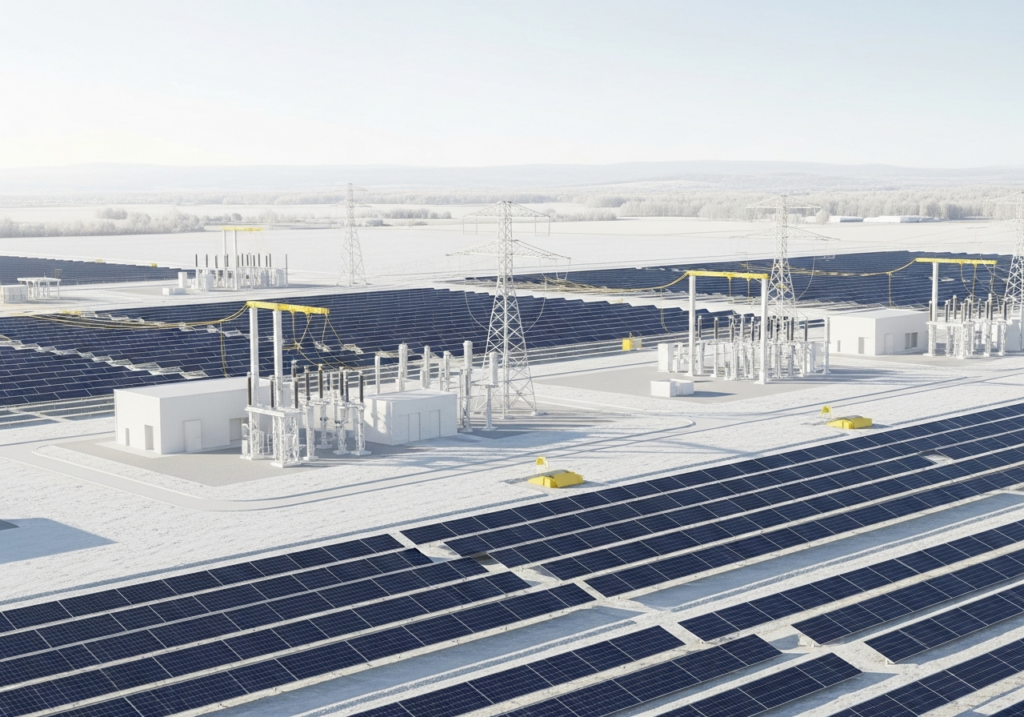
Medium-voltage collection systems gather power from inverter stations, routing electricity to on-site substations. Grid connection infrastructure, including transformers and switchgear, must meet transmission system operator requirements. Finally, commissioning and testing verify system performance before commercial operation begins. For comprehensive information on these processes, the utility-scale solar construction guide provides detailed technical specifications.
Who Builds Large-Scale Solar Parks in Different European Markets
Market conditions vary substantially across European countries, affecting which builders operate where and how they structure projects. Spain and Portugal have seen rapid utility-scale development, attracting both local and international construction companies. Germany maintains strict technical standards that favor builders with deep experience in its regulatory environment.
Eastern European markets, including Poland, Romania, and Hungary, present different challenges: evolving grid infrastructure, varied permitting processes, and currency considerations for international developers. The Nordic countries require construction approaches adapted to shorter building seasons and specific ground conditions.