

Is a solar tracker system worth the investment for large-scale projects? For our 2026 project in Austria, the answer lies in the Levelized Cost of Energy (LCOE).
Unlike fixed-tilt systems, our Single-Axis Horizontal Trackers allow the 6 MW array to follow the sun’s trajectory from dawn to dusk. This technical precision results in a 20% energy yield increase, generating roughly 7,560 MWh annually—significantly more than a static installation of the same size.
What are the environmental benefits of tracker-based solar fields?
By increasing the energy density per hectare, the Austrian 6 MW tracker system reduces the land footprint required to power 2,160 homes. Furthermore, the project offsets over 3,400 tons of CO2 annually, proving that smart technology is the fastest path to carbon neutrality in the Alpine region.
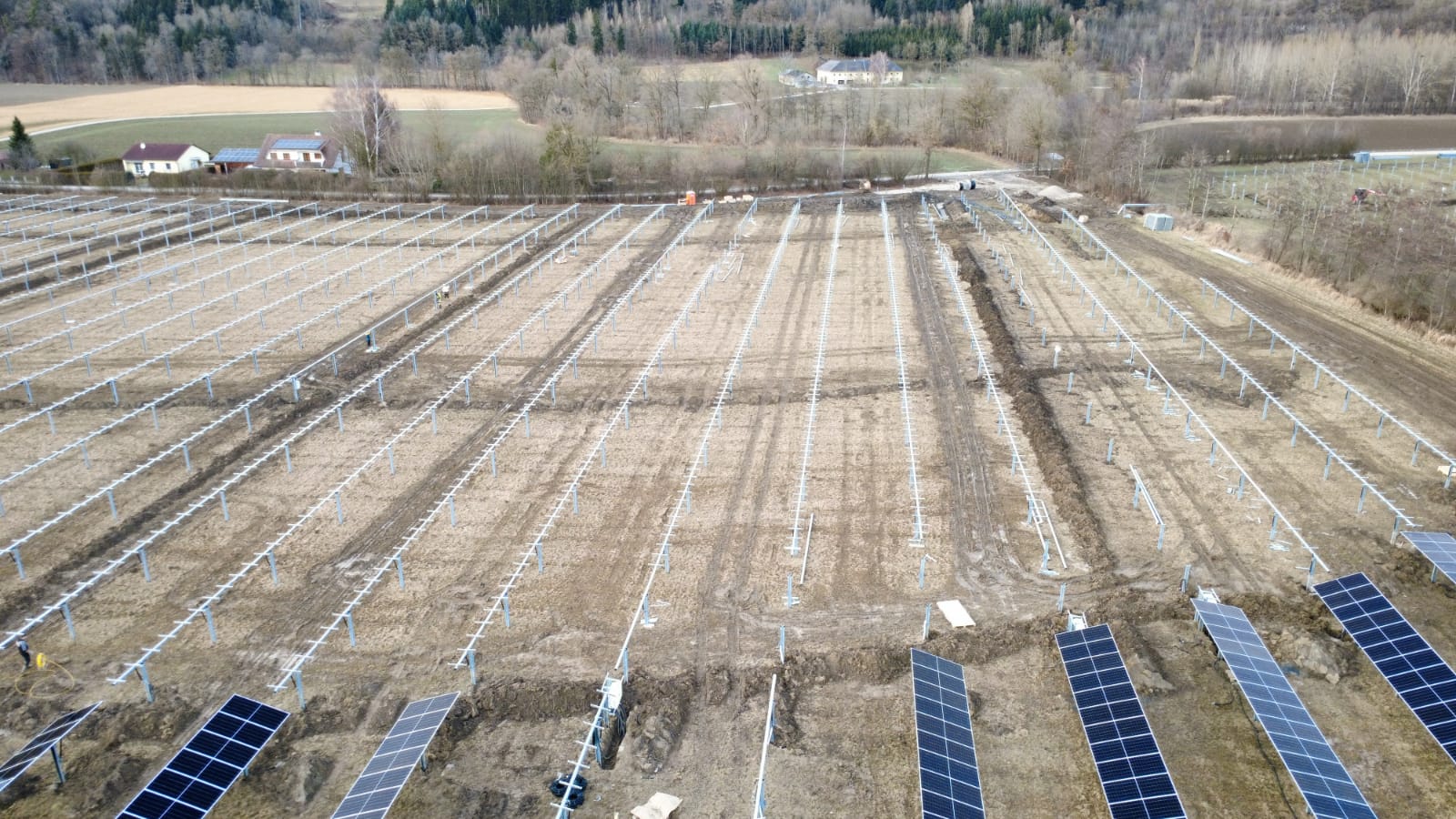
In the pursuit of energy independence, efficiency is the most critical metric for utility-scale assets. On January 2, 2025, KXS Energy highlighted the future of Austrian renewable infrastructure with our 6 MW tracker-based solar field. By moving beyond static installations, this project demonstrates how advanced motion technology can significantly lower the Levelized Cost of Energy (LCOE).
Engineering the 20% Efficiency Gain
Traditional fixed-tilt systems are limited by their static orientation, missing peak generation windows during the early morning and late afternoon. KXS Energy’s 6 MW project in Austria utilizes Single-Axis Horizontal Trackers that allow the PV modules to follow the sun’s trajectory from east to west.
This technical precision results in a 20% energy yield increase compared to traditional fixed-ground mounts. For a 6 MW installation, this efficiency gain translates into an annual output of approximately 7,560 MWh.
Technical Mastery in Alpine Terrain
Implementing tracker technology in Austria requires a high level of structural engineering expertise. As a certified German Meisterbetrieb, KXS Energy performed rigorous soil analysis and topographic mapping to ensure the tracking motors and sensors operate reliably across varied elevations.
- Precision Foundation Ramming: Specialized mounting to withstand regional wind and snow loads.
- Smart Sensors: Automated backtracking algorithms to prevent row-to-row shadowing.
- Bifacial Integration: Combining tracking with bifacial modules to capture reflected light from the terrain.
Impact and Sustainability Results
The higher energy density of tracker systems allows us to generate more power using a smaller land footprint. This 6 MW site successfully provides clean energy for approximately 2,160 Austrian households. Furthermore, the increased efficiency contributes to a massive carbon offset of over 3,400 tons of CO2 annually.
By choosing tracker technology, developers ensure their assets are future-proofed against rising energy demands while maximizing the return on investment through superior technical execution.