What are free-field photovoltaic installations? 5 Essential Facts
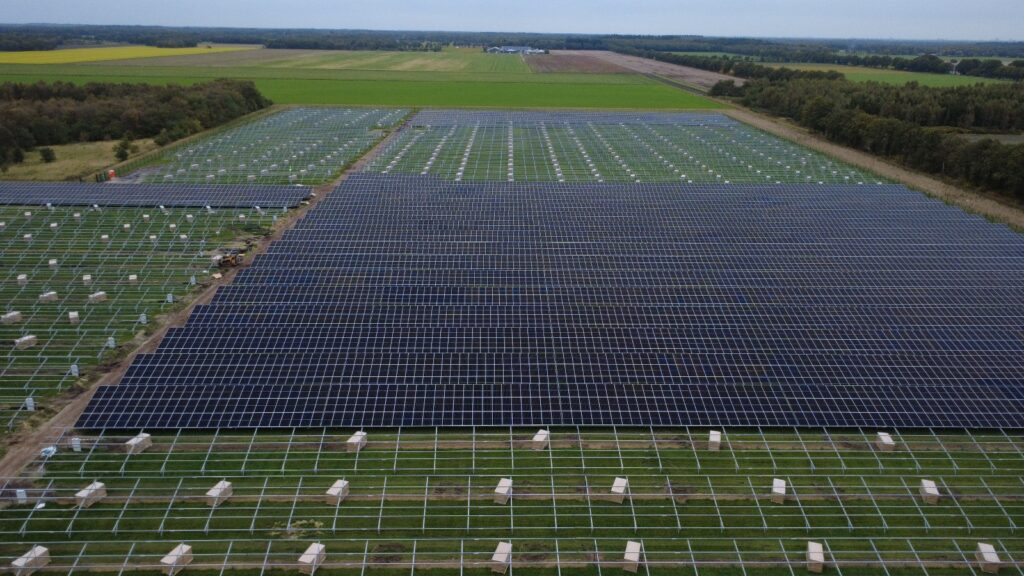
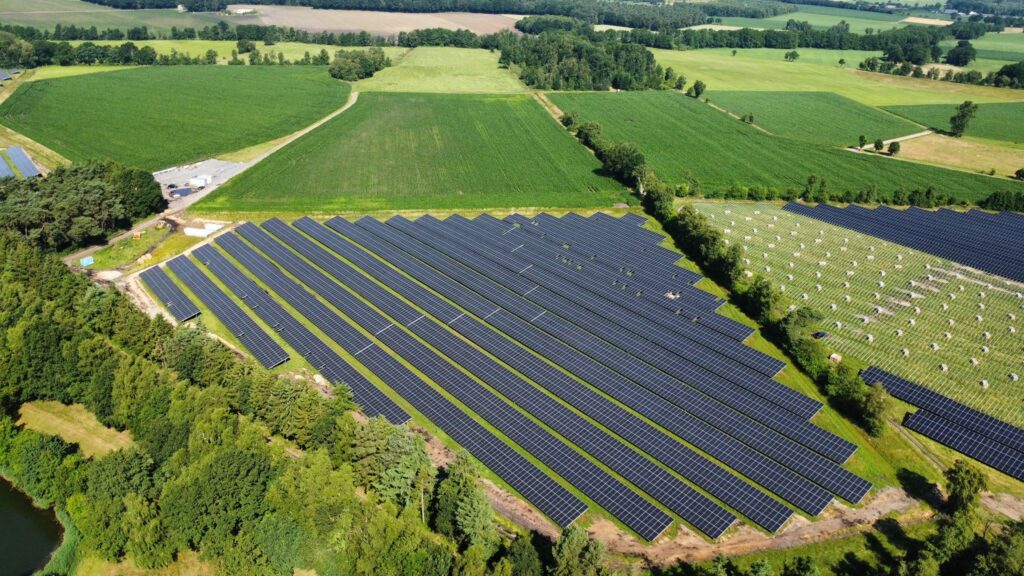
What are free-field photovoltaic installations? These are ground-mounted solar power systems deployed on open land rather than rooftops or building structures, designed specifically for utility-scale electricity generation. Free-field photovoltaic installations, also called ground-mounted solar farms or open-field solar plants, represent the backbone of large-scale renewable energy infrastructure across Europe. They typically range from 1 MW to several hundred MW in capacity, utilizing agricultural land, brownfields, or designated energy zones. For energy developers and investors seeking to understand this foundational technology, free-field systems offer distinct advantages in scalability, maintenance access, and optimal panel orientation that rooftop installations cannot match.
How Free-Field Photovoltaic Installations Differ from Rooftop Systems
The fundamental distinction between free-field photovoltaic installations and rooftop systems lies in scale, site flexibility, and engineering approach. Ground-mounted systems occupy dedicated land parcels where developers control every aspect of installation geometry, unlike rooftop projects constrained by existing building structures and load-bearing limitations.
Free-field installations allow engineers to optimize tilt angles and row spacing for maximum solar irradiance capture. In central Europe, this typically means south-facing panels tilted between 30 and 35 degrees. The open environment enables efficient maintenance vehicle access, reducing operational costs over the project lifetime of 25 to 30 years.
These systems also accommodate larger inverter stations, transformer substations, and grid connection infrastructure that would be impractical or impossible on building rooftops. The result is significantly lower levelized cost of electricity compared to distributed rooftop generation at equivalent total capacity.
Core Components of Ground-Mounted Solar Farms
Understanding free-field photovoltaic installations requires familiarity with their primary components. Each element plays a critical role in converting sunlight to grid-ready electricity.
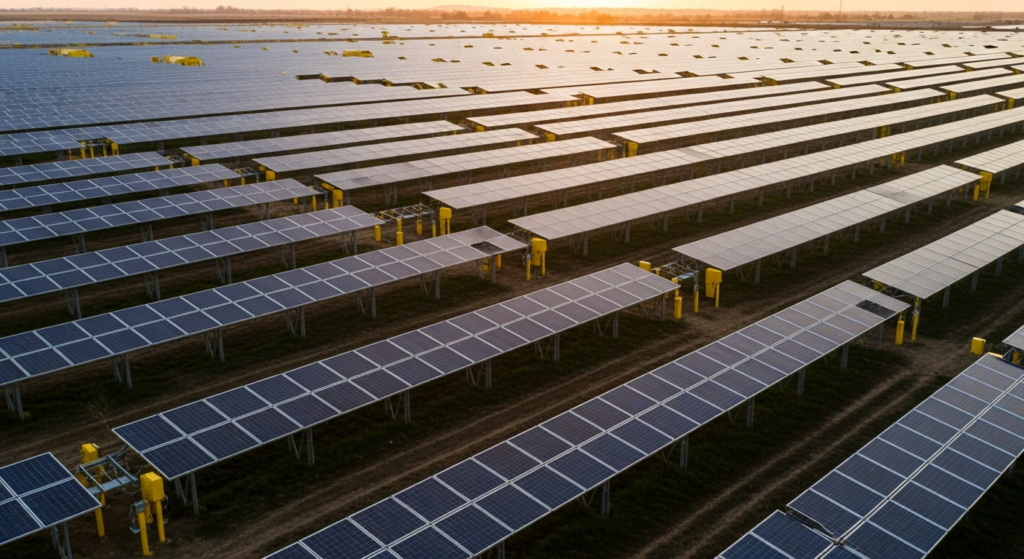
Mounting structures form the foundation. Fixed-tilt systems use steel or aluminum frames anchored by driven piles, concrete foundations, or ground screws depending on soil conditions. Single-axis trackers rotate panels east to west throughout the day, increasing energy yield by 15 to 25 percent in suitable locations.
Photovoltaic modules constitute the generation source. Utility-scale projects predominantly use monocrystalline silicon panels rated between 500 W and 700 W per module. Bifacial modules, which capture reflected light from the ground surface beneath, have become increasingly common in free-field applications.
Inverters convert direct current from panels into alternating current compatible with transmission grids. Central inverters serve multiple module strings, while string inverters offer redundancy and simpler replacement. The choice depends on project scale and developer preferences.
Balance of system includes cabling, combiner boxes, monitoring systems, and security fencing. These elements represent roughly 30 to 40 percent of total project costs but determine long-term reliability and performance.
Site Selection Criteria for Free-Field Photovoltaic Installations
Successful ground-mounted solar projects begin with rigorous site assessment. Developers evaluating potential locations must consider multiple technical and regulatory factors before committing capital.
Solar irradiance data provides the baseline for energy yield projections. Southern European sites typically receive 1,400 to 1,800 kWh per square meter annually, while northern locations range from 900 to 1,200 kWh. These figures directly determine project economics and financing viability.
Grid connection capacity often presents the greatest constraint. Free-field photovoltaic installations require substation access with sufficient headroom to accept generated power. Connection costs can range from minimal for sites near existing infrastructure to project-threatening for remote locations requiring new transmission lines.
Land characteristics influence foundation design and construction costs. Soil bearing capacity, groundwater levels, slope gradients, and existing drainage patterns all affect mounting system selection. Rocky terrain may require different anchoring methods than soft agricultural soils.
Regulatory frameworks vary significantly across European jurisdictions. Environmental impact assessments, agricultural land conversion permits, and building authorizations can extend development timelines by 12 to 36 months depending on local requirements.
Construction Phases for Utility-Scale Solar Plants
The construction sequence for free-field photovoltaic installations follows a standardized progression that experienced contractors execute efficiently. Our utility-scale solar construction guide details each phase comprehensively.
Site preparation involves vegetation clearing, access road construction, and topsoil management. Environmental protection measures begin immediately, including silt fencing and designated material storage areas.
Foundation installation proceeds based on geotechnical study results. Driven steel piles remain the most common approach, with pile driving equipment achieving 200 to 400 installations per day under favorable conditions. German engineering standards ensure precise alignment tolerances.
Mounting structure assembly follows foundation completion. Crews install purlins, module clamps, and cable management systems before panel placement begins.
Electrical installation encompasses string wiring, combiner box connections, inverter commissioning, and transformer energization. This phase requires certified electrical contractors working to national grid codes.
Commissioning and testing verifies system performance against design specifications. String-level current measurements, insulation resistance tests, and grid synchronization procedures ensure the plant meets contractual output guarantees.
Comparison of Free-Field Installation Technologies
| Technology Type | Energy Yield Increase | Capital Cost Premium | Best Application |
|---|---|---|---|
| Fixed-tilt mounting | Baseline | Baseline | All climates, cost-sensitive projects |
| Single-axis tracker | 15-25% | 10-20% | High-irradiance southern sites |
| Bifacial modules – fixed | 5-15% | 3-8% | Sites with reflective ground surfaces |
| Bifacial modules – tracked | 20-35% | 15-25% | Premium sites with strong economics |
Economic Considerations for Ground-Mounted Solar Development
Investment decisions regarding free-field photovoltaic installations depend on accurate financial modeling across multiple variables. Current European market conditions show installed costs ranging from 450 to 650 euros per kilowatt for utility-scale projects, depending on location, technology selection, and procurement strategy.
Revenue streams typically combine power purchase agreements with merchant market exposure. Corporate offtake contracts have become increasingly common as industrial buyers seek renewable electricity certificates for sustainability reporting.
Operating expenses for well-designed free-field systems run between 8 and 15 euros per kilowatt annually. This covers preventive maintenance, vegetation management, monitoring services, and component replacements. Projects constructed to German quality standards consistently demonstrate lower long-term operating costs due to reduced failure rates and extended equipment lifetimes.
Financing structures have matured significantly. Non-recourse project finance is available for permitted projects with contracted revenue, while construction bridges and mezzanine products address development-stage capital requirements. Institutional investors increasingly view ground-mounted solar as infrastructure-grade assets suitable for long-term portfolios.
Frequently Asked Questions About Free-Field Photovoltaic Installations
What land area do free-field photovoltaic installations require?
How long does construction take for free-field solar installations?
What permits are needed for ground-mounted photovoltaic projects?
Can free-field photovoltaic installations coexist with agriculture?
Making Informed Decisions on Solar Farm Development
Free-field photovoltaic installations represent proven technology delivering predictable returns when properly developed and constructed. Success requires thorough site assessment, appropriate technology selection, and experienced construction partners who understand utility-scale complexity. Developers should prioritize contractors with demonstrated capability in foundation engineering, electrical systems integration, and commissioning – the phases where errors most severely impact long-term performance. For projects across Europe, kxs-energy.com provides the technical expertise and construction precision that institutional investors and grid operators expect from utility-scale solar infrastructure.